What If Low-Carb Diets Can Cure Diabetes and Heart DiseasesLow-carb diets can be
advantageous in increased body weight , heart disease and treatment of diabetes according to new
clinical studies .Low carb diets still revolutionize the clinical practice of nutrition. Many scientists are now indicating low carb solutions for many disease states, according to Richard D. Feinman, Ph.D., professor of biochemistry at SUNY Downstate Medical Center in Brooklyn.
He also says “And practically speaking, some of the clinical results, particularly in diabetes, are quite remarkable.”
“I have seen many patients who were heading for disaster and who have turned their disease and their lives around simply by avoiding foods they cannot tolerate: carbohydrates.”This simple, effective approach could reverse the epidemic of Type 2 diabetes,” says Mary Vernon, MD, FAAFP, CMD and President of the American Society of Bariatric Physicians, Known for her controlled carbohydrate challange with her patients for some time now.“Thanks to the low-carb approach we’ve seen many patients reduce or completely eliminate drug therapy. Of course, it is up
to a patient if they want to continue their medication, but they should at least be given a choice of a non-pharmacological approach.”
Low carb diets seem to have always had a metabolic foundation and although the news attention has concentrated mainly on
the business side of the topic, science continues to dramatically move forward with it.Some of the important findings about low-carb diets are:
+ A restrained carbohydrate way of life is an efficient way to control Type 2 diabetes blood sugar. Patients are
consistently able to lower or do away with disease.
+A third of overweight Americans who are trying to lose weight, are doing so by eating less carbs.
+ More recent evidence to bear the weight of the benefits of a restrained carbohydrate way of life for heart risk factors such as low HDL and small LDL lipoprotein standard.+ A restrained carbohydrate way of life may be the best treatment for metabolic syndrome, a forerunner condition to
diabetes and heart disease.
+Over 60 percent of Americans are overweight; 38 percent are actually doing something about it.
It is not only the human kind that can develop diabetes. Even our beloved pets, no matter how well we care for them, can develop diabetes.This is often a scary situation for the pet owner and the
first question that is usually asked of the veterinarian is -will my pet need to be put to sleep-?Of course this is a difficult issue and the answer may vary on the overall age and health of your pet.Many older pets that are diagnosed with diabetes go on to live many more happy years, but this takes commitment and close care of your pet.Diabetic cats and dogs can live just as long as perfectly
healthy pet if the diabetes is diagnosed and treated
properly by both the veterinarian and the owner.This takes great commitment from the owner. Pets must be cared for and watched daily with a high level of care and patience.There can be no feeding the cat and forgetting until the next day. There is no leaving the pet along to go on a trip. Every day your pet will need medication, fed a proper diet and his behavior will need to be monitored closely.This doesn’t mean you will have to give up your job and stay home full time with your pet, but it does mean you
will have to pay more attention to what his behavior is and
know what to do if the situation should change.It is also more of a financial obligation to have a sick
pet. So it is something that should be discussed in length
with your vet.
Diabetes is a serious disease that needs to have medical attention as soon as some symptoms begin to surface. The reason why diabetes is serious is because it will cause the body to shut down and you will go into sugar shock. After sugar, shock the body will go into a coma and a person may never come out of the comatose state. Diabetes, in general, can cause the body to stop circulating the blood flow properly and thats why many diabetics have to have parts of their body amputated. Diabetics also have a higher change of developing kidney, pancreas, and other organ diseases.Type two diabetes will usually affect people much older than that of type one. It is the most common type of diabetes and effects thousands of people each day. It is also referred to as adult onset diabetes.
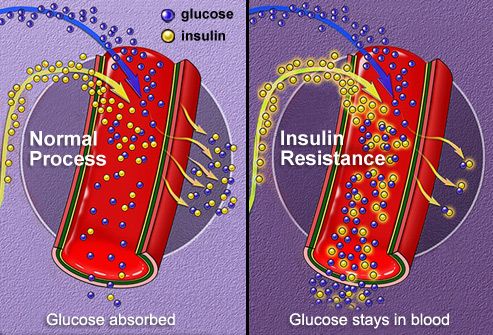
Typically, it is due to being overweight, but there are exceptions to the rule. Type one is where your body lacks insulin and type one is where you body will begin to resist insulin. This type is developed by usually genetics and often is passed down through generations. The insulin levels with type two diabetics are sometimes normal, but the body wont respond to it. This will create higher blood levels because the body is not using the glucose up. When you have type one you are considered
to have symptoms of hyperglycemia, however you will have the opposite reaction with type two and have hypoglycemia.Hypoglycemia is where you have low blood sugar. It is from the fact that your body cannot provide enough energy for the activities of the body. It will cause you to be hungry much like type one. It will also make you very nervous or shaky. You will perspire more than the average person and you will become dizzy or light headed. You will become over anxious or weak
which will cause you to have difficulty speaking or feeling restless. You will also become confused and possibly hallucinate. Because of your anxiety, you may have nightmares or perspire so much during sleep that your entire bed becomes wet or damp. You will often wake up tired, irritable, and confused.Type two is the most common type of diabetes and exists in all cultures. It is often the result from obesity and it is doesnt discriminate ethnically or racially. Obesity has become a problem for todays world and has been found as a tendency to promote diabetes rather its genetically enhanced or not.
The causes of the disease have many factors to blame, but genetics seem to be the strongest factor. Obesity is also found to
be genetically enhanced and the two could be related somehow. Treatment is simple, it is taken orally to lower the blood sugar which can cause hypoglycemia and at some point insulin injections may be needed.You can find more information on http://www.all-about-diabetes-symptom.com/
Garlic (Allium sativum) has been used for centuries for both cooking and medicinal purposes. Known as the stinking rose and Russian penicillin, its medicinal purposes have been documented for centuries and have always been a popular remedy for colds, coughs, and sore throats. Garlic was used in World War I and World War II to cure many diseases and because it is a potent antiseptic. Garlic is universally known for its health benefits. It is an excellent source of phytochemicals and contains vitamins A, B1 (thiamine), B2 (riboflavin), C, iron, phosphorous, sulphur compounds, and calcium. Medical studies have shown that it lowers blood pressure, reduces cholesterol and hypertension, prevents some cancerous tumours, protects against bacterial and fungal infections, and is good for the blood and heart. It is useful as an expectorant in respiratory ailments, eliminates toxic metals, and supports the immune system. Garlic may prove to be useful for diabetics, as it seems
to regulate blood sugar levels.
As a culinary spice, the Indians, Egyptians, and Europeans have appreciated garlic for thousands of years, and most notably the Italians and Chinese who have made extensive use of this much-loved plant. There are records of garlic use dating back 3,000 years and botanists believe that garlic probably originated in central Asia thousands of years ago. In North America, early colonists discovered that the First Nations people were using a native species of garlic to treat a variety of medical problems including snakebite and intestinal wormsGarlic is a moderately hardy herbaceous (herbaceous means a plant that lacks woody tissue and dies to the ground at the end
of the growing season) perennial. It grows from 2-3 feet (0.6-1m) tall and has flat, long, pointed green leaves extending from the base. The young leaves grow 2 feet (0.6 m) tall and have a delicate chive-like flavour. Garlic has erect, hollow, green stalks that support pink or whitish flowering clusters or bulbils that appear in mid-summer. The leaves are organised into segments called cloves and may have anywhere from 415 cloves in a bulb. Garlic does best in rich, well-drained, highly
organic soils, prefers full sun, although it will grow in partial shade. Avoid over-watering or the bulbs will rot. Garlic has white energy for chromotherapy purposes.
Garlic is available throughout the year but it is easy to grow your own. To plant, separate cloves from the head and plant cloves with the pointed end up. Garlic can be planted in early spring or late fall. It is best to plant cloves or bulbils available from nurseries or garden catalogues as store bought garlic is often sprayed with a sprout and root inhibitor that confuses its natural growth cycle. Fall plantings produce the best yields, as garlic needs a long growing period and a cool period below 10 C (50 F) for two months. If over-wintering in zones 3 or 4, plant cloves at least 3 inches (8 cm) deep and
mulch with leaves or straw; otherwise plant bulbs 2 inches (5 cm) deep and 6 inches (15 cm) apart. (In the winter, I plant store-bought garlic in pots and snip the leaves to impart a fresh garlic flavour to salads and soups.) Garlic is generally pest and disease free.
Harvest garlic when the leaves die back and begin to turn brown and collapse. Pull up the mature plants and dry in the sun for a week; then trim or braid the stalks and hang the garlic braids in the shade to dry further. To store, keep in a dry,
dark place with good air circulation. Garlic will keep for up to 6 months if stored in temperatures no higher than 0 C (32 F). Leaves, bulbs, and bulbils may all be eaten.
In the garden, garlic helps protect plants from fungus and pests. Scientists at New Castle University have shown that a barrier of garlic oil is an effective slug and snail repellent. Planted near roses, it aids in fighting black spot. Garlic spray is used to discourage many insects and combats various blights found on vegetables and flowers. To make garlic spray, mince garlic and add water. Some people add a few drops of vegetable oil to the spray to make it cling to flowers and foliage. Garlic spray is a non-toxic alternative to using harmful chemicals in the garden.
In the kitchen, garlic can be used fresh, dried, or powdered. Fresh is best. To peel, place the garlic cloves on the work surface and whack with the flat edge of a knife. The garlic will crack out of the skin making it easier to peel. You can also put the garlic in boiling water for 30 seconds, drain, and then peel when cool. Crush with the flat edge of a knife and slice or chop as necessary. Garlic can be used to enhance the flavour of seafood, salad dressings, stews, casseroles,
vegetables, soups, meat dishes, pasta, vegetables, and poultry. When roasting meat, make slits in the meat, sliver garlic,
and stuff into the slits. Roast the meat as usual. Roasting or baking garlic mellows the taste. To eliminate garlic breath,
chew the traditional breath fresheners: parsley, fenugreek, or fennel.
Babies and women may be protected against developing diabetes disease through breast feeding, according to new research. This current study states that the longer women nursed, the lower their risks of developing diabetes.Diabetes as a medical disorder characterized by varying or persistent elevated blood sugar levels, especially due to eating, is a serious disease which symptoms are very similar for all types of diabetes.Breast feeding is when a woman feeds a baby or a young child with milk produced from her breasts. The best thing for feeding a baby is breast milk, as experts say, if the mother does not have transmissible infections. Although study findings are not conclusive, researchers explain that breast-feeding may change metabolism of mothers which may help keep blood sugar levels stable and make the body more sensitive to the blood sugar-regulating hormone insulin. This theory is based on some evidence that show that in rats and humans that are breast-feeding, mothers have lower blood-sugar levels than those who did not breast-feed.
According to the study published in the Journal of the American Medical Association, women who breast-fed for at least one year were about 15 per cent less likely to develop diabetes type 2 than those who never breast-fed. For each additional year of breast-feeding, there was an additional 15 per cent decreased risk. A total of 157,000 nurses participated in the new study. They answered periodic health questionnaires and were followed for at least 12 years. During the study, 6,277 participants developed type 2 diabetes.
According to a new study, diabetes and Alzheimer's diseases are more related than everybody thought. Some researchers believe that Alzheimer's could be a form of diabetes, because findings show that insulin production in the brain declines as Alzheimer's disease advances.
Through a series of experiments, a group of researchers discovered that the brain produces insulin and that this substance produced by brains of patients with Alzheimer's illness tends to fall below normal levels.For the neuropathologist at Rhode Island Hospital and professor of pathology at Brown University Medical School, Suzanne M. de la Monte, “insulin disappears early and dramatically in Alzheimer's disease and many of the unexplained features of Alzheimer's, such as cell death and tangles in the brain, appear to be linked to abnormalities in insulin signaling. This demonstrates that the disease is most likely a neuroendocrine disorder, or another type of diabetes”. During the early stages of Alzheimer's disease, brain levels of insulin and its related cellular receptors fall precipitously, as her group of researchers explained. They believe that Alzheimer's might be a new form of diabetes since the evidence
shows insulin levels continue to drop progressively as the Alzheimer's disease becomes more severe.The team led by de la Monte also found that low levels of acetylcholine are directly linked to this loss of insulin and insulin-like growth factor function in the brain. Acetylcholine is a hallmark of Alzheimer's disease.The researchers team autopsied the brain tissue of 45 patients diagnosed with different degrees of Alzheimer's called “Braak Stages” and compared those tissues to samples taken from individuals with no history of the disease.
In comparison to many forms of exercise, the benefits of Chair Yoga far outweigh the risks. The therapeutic exercises work the body, from head to toes, to the best of any clients ability.
Therefore, the method used, addresses the whole body in a single routine.
This is an amazing feat, for a low-impact exercise program, where the average session lasts 45 to 60 minutes. The following information will highlight some of the many benefits of regular participation in a Chair Yoga
class.Increased circulation is a result of movement and every body part that can move is used in a typical Chair Yoga class. For many of us, we think of cardiovascular heath first, and this is right fully so, but Chair Yoga helps many other forms of circulation, within the body, as well.To sit still for days on end, we invite diseases of many kinds. Diabetics need movement to keep sugar levels in tolerance zones. Chair Yoga also has routines for the feet, toes, hands, and fingers, so there is no part of the body left out. Due to this whole body approach, the immune system is also stimulated by regularly attending Chair Yoga classes.The many movements, bending, and twisting, in a regular Chair Yoga session, stimulate the elimination of toxins, within the body. Every time you bend the waist in one direction or another, the stomach aids in digestion and the lower back is gently stimulated.Now, back to cardiovascular benefits – There seems to be a lot of confusion about what is classified as aerobic exercise. One of the definitions for aerobic exercise is: Any exercise that would increase circulatory and respiratory ability. When the heart and lungs have to work harder to keep up with the body’s need for oxygen that is aerobic.In fact, gardening and housework are also aerobic exercise that most seniors routinely do. This is not to say that gardening and housework are complete health maintenance systems, but they do burn over 200 calories per hour, for the average person, and meet the aerobic definition.Much of this mentality stems from the No pain No gain era. Most of the original advocates of this theory are now nursing their own wounds and practicing gentler forms of exercise. After all, none of us are immortal, and the body can only take so much abuse over time.
May I remind anyone, who is left standing, from the No pain No gain era, that walking is also classified as aerobic exercise. So, whether you walk or run a mile, aerobic benefits are gained and significant calories are burned.
Diabetes EpidemicWith obesity levels being at an all time high, the epidemic
of type 2 diabetes is growing at an alarming rate, and will
only get worse.Between 2001 and 2002, the diagnosis of diabetes went from
5.5 percent of Americans to an alarming 6.5 percent. In
just one year!Overall, twelve million Americans have been diagnosed and
another 5 million Americans have diabetes and don’t know
it. And yet another 12 millions are on their way to type 2
diabetes because of impaired glucose levels.Not knowing is the worst because risks of untreated
diabetes puts us at a terrible risk of complications
including but not limited to blindness, amputations and
ultimately death.The stickler is, that type 2 diabetes is almost completely
preventable. Doctor’s say eat less, eat better and
exercise. The numbers show just how many Americans are
currently overweight.Statistically, people are now living longer, and it has
been on the rise for years. But this will not continue if
type 2 diabetes is not put under control.We are a gluttonous society and ultimately it is affecting
how we live and how long we live.And unfortunately, the diabetes epidemic is not just a US
problem. It is spreading worldwide with epidemic reports in
Asia, the Middle East and the Caribbean.It is estimated that by 2025, the number of diabetics
worldwide will rise to 380 million. And diabetes is now
affecting more of the young and middle-aged population in
developing countries between the ages of 40 and 59.
Stevia is a shrub native to Paraguay and Brazil and has been used by the native Guarani Indians for over 1500 years. The Guaranis used stevia as a natural herbal sweetener to sweeten their bitter drinks such as mate and for medicinal use to treat diabetes and hypertension. It nourishes the pancreas but does not raise normal blood glucose levels, making it safe for diabetics and hypergylcemics. Stevia lowers high blood pressure but does not affect normal blood pressure. Stevia contains an abundance of phytonutrients and trace minerals. The herb also contains no calories or carbohydrates and its antibacterial properties help prevent tooth decay. Stevia is an ideal natural sweetener alternative for sugar and artificial sweeteners such as aspartame. As the herb has no calories or carbohydrates, it acts as a great weight loss aid and digestive aid and helps minimize cravings for sweets, fatty foods and helps with addictions to tobacco and alcohol. Stevia is useful for healing a variety of skin problems. Whole leaf can help soften and tighten the skin and smooth wrinkles. Stevia supreme liquid can be used on acne outbreaks, eczema and lip and mouth sores. Studies show that stevia prevents gum disease and prevents cavities.The Upper Canada Stevia Company is proud to offer only high quality stevia products. We use only high rebaudioside A content stevia extract in our products. Rebaudioside A is the sweetest and purest part of the leaf. We offer safe, and secure on-line shopping, excellent customer service and guaranteed next business day shipping on all in stock items. The Upper Canada Stevia Company offers worldwide stevia bulk, stevia wholesale and stevia retail sales. Our product
line includes:- whole leaf powder, stevia powder, liquid stevia and a spoonable blend. The Upper Canada Stevia Company offers a stevia to sugar conversion chart plus a carbohydrate and calorie counter and a stevia recipe forum to swap ideas on cooking with stevia and baking with stevia. Our stevia recipe forum includes sections on cakes, cookies, bread and drinks. The stevia
recipe forum also includes a general forum to swap stevia information and comments. Check out the Government reports, research and studies in our stevia links section.
We diabetics have to pay even more attention to our teeth and gums than other people.
We are at greater risk of cavities, gum disease and tooth infections. Not only that, but those infections can cause our blood sugar to rise, so it becomes a vicious cycle.
Here are some mouth problems common in diabetics.
PlaquePlaque is, of course, a problem for many people, not just diabetics. But it’s caused by starches and sugars, and of course we have more than our share of those! So diabetics are highly prone to plaque.Dry mouthSometimes my mouth is so dry in the morning I can hardly speakI’m sure you know how that feels. But it’s more than just inconvenient, it’s dangerous to the health of our mouths. You see, saliva washes away many of the bacteria that cause cavities and gum disease. Dry mouth cuts the amount of saliva available for this job, so the result is more cavities and gum disease. Dry mouth sometimes also creates inflammation of the soft tissue in the mouth, making eating difficult and unpleasant.While there are artificial saliva substitutes, which your dentist can tell you about, you...
Cholesterol is a major health problem, particularly if someone is overweight and obese. The negative effects of unmanaged cholesterol levels in the body has gotten to the point that most anyone is aware of the risks and side effects. This makes medications like anti-cholesterol medication and weight loss pills rather popular today, with sales reportedly increasing every year. However, aside from the fact that these pills are nowhere near as effective as they are advertised to be, there may be other problems. For example, recent studies have discovered that a popular drug used to combat cholesterol, Zocor, might be to blame for some people having difficulty sleeping, with some patients facing the risk of long-term insomnia.While sleep may not seem to be entirely connected to weight gain and weight loss pills, there is a link between the two. A lack of sleep can cause someone to inadvertently begin to gain more weight, effectively rendering the effects of the diet pills null. Another potential complication to lacking sleep comes in the form of resistance to insulin, which can be very dangerous for patients who are diabetic or have already high blood sugar levels. While insomnia is a risk for people who use Zocor, it is not the only sleep-related problem. For the most part, the research discovered that the main effect was that the quality of the sleep was poorly affected.
A recent study conducted by Dr. Beatrice Golomb, from the University of San Diego School of Medicine, was focused on discovering why people using Zocor and chemically similar drugs had sleep-related problems. The test was conducted with two groups of test subjects, with one group being given placebos and the other being given the actual drug. Both groups were observed and their sleep patterns and signs recorded regularly, providing Dr. Golomb a large amount of data from which to draw from and support her findings.Zocor, along with the related compound called Pravastatin, work by lowering the body’s low-level lipoprotein (LDL), better known as bad cholesterol. The two related compounds are either dissolved in water or dissolved in fat, but both present a number of risks. It isn’t very hard for either compound to make it past the membrane barrier of the brain, seeping into the cells and affecting normal functioning. This is a larger risk in the fat-soluble Simvastatin, better known as Zocor. A recently concluded study found that these drugs could have an effect on the areas of the brain that are most active while one is asleep, affecting sleep quality in most and the ability to fall asleep in extreme cases.
This is an interesting situation, mainly because poor sleep quality can cause side effects that are similar to the ones that one gets with high cholesterol levels. Insomnia would be the least of a person’s worries if the lack of good sleep gets to the point where heart attacks and strokes are becoming a very real risk. That is not to say that improper sleep or a lack of it is not, in and of itself, a major concern. The study pointed out the possibility that there might be more effects to the use of both pravastatin and simvastatin, but that the research team was primarily concerned with the connection the drugs have to sleep problems.
Planning on a family vacation? Don’t worry trips and other family outings do not have to
be restricted because your child has been diagnosed with juvenile diabetes. You can do it
all still but there are some extra preparations and planning that will have to happen first.
The preparations you make is going to be dependant on what kind of trip you are
planning, for how long and the activities that you will be participating in.
It is a good idea if you are going out of town on an airplane or by car to get some
documentation from your doctor. You should get a letter that explains your child’s
condition and an extra prescription for any unforeseen eventualities. If you are going on
a lengthy plane ride, you will need the letter to get permission to bring your child’s
medicine and syringes onto the airplane with you instead of storing them in your luggage.
If you are unsure what special arrangements you are going to need to make, speak to your
doctor.
If you are going on a vacation that will involve lots of extra physical activity
(such as camping or hiking), be sure that you bring extra food to replace the energy that is
going to be used up. If there is going to be less physical activity, more frequent testing of
blood sugar levels will be necessary to make sure too much insulin isn’t being used.
When traveling a distance that involves crossing different time zones, be prepared to
make additional adjustments to your child’s eating schedule. No matter what the clock
says, your child is going to need their insulin and food on their body’s time. Again, your
doctor can help you make a plan for this adjustment and it will be based on the length of
your trip, the difference in time zones, and your child.
In many children with juvenile diabetes a period occurs shortly after being diagnosed
they go through what is commonly called as the honeymoon period. This is a time when
your child’s blood sugar levels will return to normal without the aid of additional insulin.
It is important to remember that this happens in a lot of children and does not mean that
the disease has gone away. The pancreas is still trying to do its job and is working
overtime to make insulin for your child’s body. Following are some guidelines to follow
when this happens.The length of the honeymoon period is not the same for everyone. In one child it can last months while in another child it can feasibly last for over a year. It all depends on how
much insulin your child’s pancreas can produce and how long it can keep up that rate of
production. It will be hard to figure out how much if any insulin your child needs during
this time when their blood sugar levels are normal. Constant monitoring of the blood
glucose levels is still required, because you will not know when the honeymoon period is
over otherwise.Keep in close contact with your health care provider. He or she will help in determining what the best plan is to follow during the honeymoon phase. Some may even want you to give minute amounts of insulin daily in order to keep your child used to the injections and
your child’s body accustomed to the additional insulin it will need.It can be emotionally hard for your child during the honeymoon phase. Everything will seem back to normal and they are going to want to resume their life like it was prior to diagnosis. It is important to remain on the diabetic diet and continue monitoring during this time.
It can be scary when you realize that something may be wrong with your child. You will
want to find out right away what it is and how you can help. The testing that is done to
determine if your child has juvenile diabetes is not very evasive and can be determined in
a very short period of time.Once you have taken your child to your health care provider, blood work will be ordered to check your child’s blood glucose levels. The first test that is performed is normally a with a blood glucose monitor in your doctor’s office. If the level is high a fasting blood
glucose test will be ordered. Your child will not be able to eat for 8-10 hours prior to the
blood being drawn. It is best to do this first thing in the morning as soon as your child
wakes up. Bring a snack along for your child to eat after the blood work as they are sure
to be hungry.Depending on the results from the fasting blood test your doctor will probably order
another round of tests to verify the results.
This test is also done on an empty stomach
and you should make an appointment as you will have to be in the office from 1-3 hours.
When you arrive at the lab your child will have some blood drawn and then be asked to
drink a beverage that is high in sugar. After one hour another blood test will be
conducted to see how your child’s body has processed the sugar. If the three hour test
was ordered two more blood tests will be done at the two hour and three hour marks.
The results from this test will give your doctor the information needed to make a
diagnosis of juvenile diabetes in your child.
The vital step after your child is diagnosed with juvenile diabetes is to develop a support network in the community. Your child’s school should be at the top of this as a resource to tap into. Not only is it essential that the teachers at your child’s school know about his special dietary needs and what to do in an emergency they can provide help in other ways too. In addition to good control of blood glucose levels to ensure the current and future well-being of your child’s health, good control of diabetes is critical to learning. When a child is experiencing highs or lows in the blood sugar reading this can create disruptions and make it hard for them to concentrate and learn. The teachers or other support personnel are going to need instruction for handling your child’s diabetes and what to do in case of an emergency. For a child with a low blood sugar it is important that their blood glucose level is checked and that they have something to eat. For a child with a high blood sugar, their blood glucose will need to be checked too and a decision has to be made whether or not to give insulin.
This is a big responsibility to hand over to another adult and can be nerve-racking for parents. An emergency kit should be with your child at all the time with instructions on what to do to help if something is wrong. Included should be a snack, a food item or glucose tablet that is fast acting (gets sugar into the system quickly), a list of emergency numbers to call, and a glucose monitor. A teacher or school nurse should be designated as the person responsible for your child while at school and they should have a back-up in case they are not present for a day or more.
Another part of the routine for monitoring and controlling juvenile diabetes is checking
for the presence of ketones. This is done by dipping a stick available at drug stores into
your child’s urine. If ketones are present the end of the stick will turn a certain color. By
matching the color of the stick with the legend on the container you can determine the
level of ketones present.You should check for ketones first thing in the morning before your child eats (fasting). Give your child additional insulin and fluids if there are ketones present. Also, check
again in a few hours and if the test is still positive you should check with your doctor for
further instructions.When there are ketones in urine it is a sign that your child’s body is not getting enough food and it is using fat stores for energy instead of food. Excessive ketones can lead to a
condition known as ketoacidosis. This is a very serious condition and can even be life
threatening. In addition to the presence of ketones you child may be very tired, have
trouble breathing, and have stomach pains or nausea.Ketoacidosis will be present if your child’s body does not have enough insulin to process
the food he or she is eating or if they are not eating enough. The good thing about this
condition is that it is easy to prevent with careful monitoring and by following a meal
plan. If you discover ketones, it does not mean that your child has ketoacidosis. Increase
the amount of insulin that is being given in addition to reviewing recent diet changes to
try and rule out the reason for the ketones.As in all cases when you have questions about juvenile diabetes, contact your health care
provider or diabetes educator.
An emergency or first aid kit can be found in almost any home. But in a home where a child lives with juvenile diabetes there needs to be additional supplies for their needs. In addition to an at-home emergency kit, a child with diabetes should carry a portable kit with supplies with them at all times. There are going to be times when your child is going to need help to manage their diabetes and it may be an emergency situation because their blood sugar has dropped dangerously low. Your child should be wearing identification that advises everyone that they are diabetic and are taking insulin and a kit with the supplies needed to help them.The kit should include instructions on what to do in case of an emergency and numbers to call (parents and health care providers). In addition glucose tablets, fast-acting food stuff should be included to raise your child’s blood sugar quickly. Good examples of these are juice boxes and hard candies. You should include a snack that is considered long-acting too. Something that will keep for a long time such as a granola bar is a convenient item to have. This is for situations where your child should be eating their next meal but unavoidably does not have access to food (in the car during a traffic jam or out with friends).For your home emergency kit,
you should include a means to keep your child’s insulin cold in the case of a prolonged power outage. A small cooler will work nicely for this. It is also a good idea to always have extra insulin on hand. Do not wait until you are out to pick up more, you never know when an emergency can happen that would prevent your from getting some – be prepared.
When a woman develops insulin resistant during pregnancy it is referred to as gestational diabetes. The disease acts in the same manner as when a person who is not pregnant has diabetes. In most cases, after the baby is born the diabetes goes away and a woman’s blood glucose control and insulin production return to normal. The placenta that provides nourishment and keeps the baby alive as it grows inside the uterus also releases a hormone that effectively blocks or inhabits a woman’s insulin production from the pancreas. It can also affect the way a woman’s body uses the insulin that is produced. When there is too much sugar (glucose) in a woman’s system that is not being converted to energy it produces high blood sugar. This condition is known as hyperglycemia.
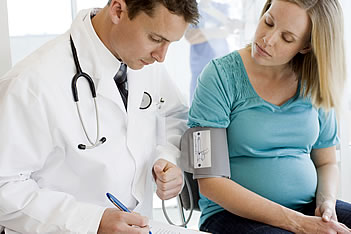
Every woman is routinely screened for gestational diabetes at her monthly doctor’s exam during pregnancy. The urine sample that the woman provides is checked for glucose (among other things). If there is glucose in the urine it is a red flag to the doctor to have the woman screened for gestational diabetes. The doctor will then send the patient to a medical lab for blood work and if the results come back positive a referral will be given to an endocrinologist (a doctor specializing in the treatment of diabetics). A treatment and management plan will be put into action for the women to follow for the remainder of the pregnancy.Although gestational diabetes is a serious condition that affects both the mother and the developing fetus there is no cause for alarm. There are many things known about treating diabetes in pregnancy – although not as much information on why it occurs. With good control of blood sugar levels, following a proper diet, and regular exercise a mom with gestational diabetes can go on to deliver a healthy baby.
The exact cause or causes of what causes gestational diabetes are not known. But there
are risk factors that can increase the chances of getting it. As with any disease, risk
factors are not a guarantee that you will contract the disease they just make the likelihood
of getting it higher. Some of the risk factors you will have control over and some you do
not.A family history of diabetes will increase the chances of developing gestational diabetes
in pregnancy. The closer the relative is to you (first generation like a parent) means the
risk is increased. If your family suffers from diabetes, your own pancreas may not be
able to produce the amount of insulin necessary while pregnant. This deficit combined
with the hormones released by the placenta can lead to diabetes in pregnancy.Women who are overweight and are clinically considered obese run a higher risk of being
diagnosed.
The excess wait puts a strain on your body, including your pancreas, and
makes it hard for enough insulin to be produced and used by your body effectively.
If you have had a previous baby with a higher than average birth weight, you are
considered at risk for your next pregnancy of getting gestational diabetes. It could have
been possible that you had it in your first pregnancy and it went undiagnosed. Babies
born from moms with diabetes in pregnancy tend to be larger unless her blood sugars are
strictly managed. Or if you had diabetes in your first pregnancy, chances are very high
that you will get it again.Since there is still no known cause a woman may have all of these factors or none and still get diabetes. It is best to attend all of your prenatal appointments with your doctor so
he can be on the look out for any signs that you may have gestational diabetes.
If you are diagnosed with gestational diabetes in pregnancy the chances are very high you
will also get the disease in future pregnancies. There have been cases where this hasn’t
happened and there may be steps you can take to lessen your chances of getting it again.
Before you plan on becoming pregnant again, start to follow the diabetic diet you were
given during your previous pregnancy. It will provide a lot of the nutrients your body
needs and will start you off on the right track to eating right while pregnant. Maintaining
a healthy body weight is also crucial to prevent a reoccurrence of diabetes in pregnancy.
If you are overweight, even losing 10-15 pounds before becoming pregnant will help
your body better manage the insulin production and use.A risk factor for getting gestational diabetes in the future is also based on how soon in your pregnancy you were diagnosed.
Some woman do not find out they have diabetes in pregnancy until the final weeks before the birth while others may be diagnosed as early as the first trimester. The earlier you are diagnosed the greater the chance that you will also have the same problem again.When planning your next pregnancy, book an appointment with your doctor. Let him or her know your plans and a blood test will be ordered. Your doctor can order a blood test that will show you average blood glucose levels for the previous few months. This will make sure that before you become pregnant you blood glucose levels are at an optimal
level. And if they are not it is recommended that you do not become pregnant until they
are under control. Not having your blood sugars under control before you become
pregnant can lead to complications for the baby during the crucial first weeks of
development.